Why Does My Cat Knead Me? The Science Behind Making Biscuits
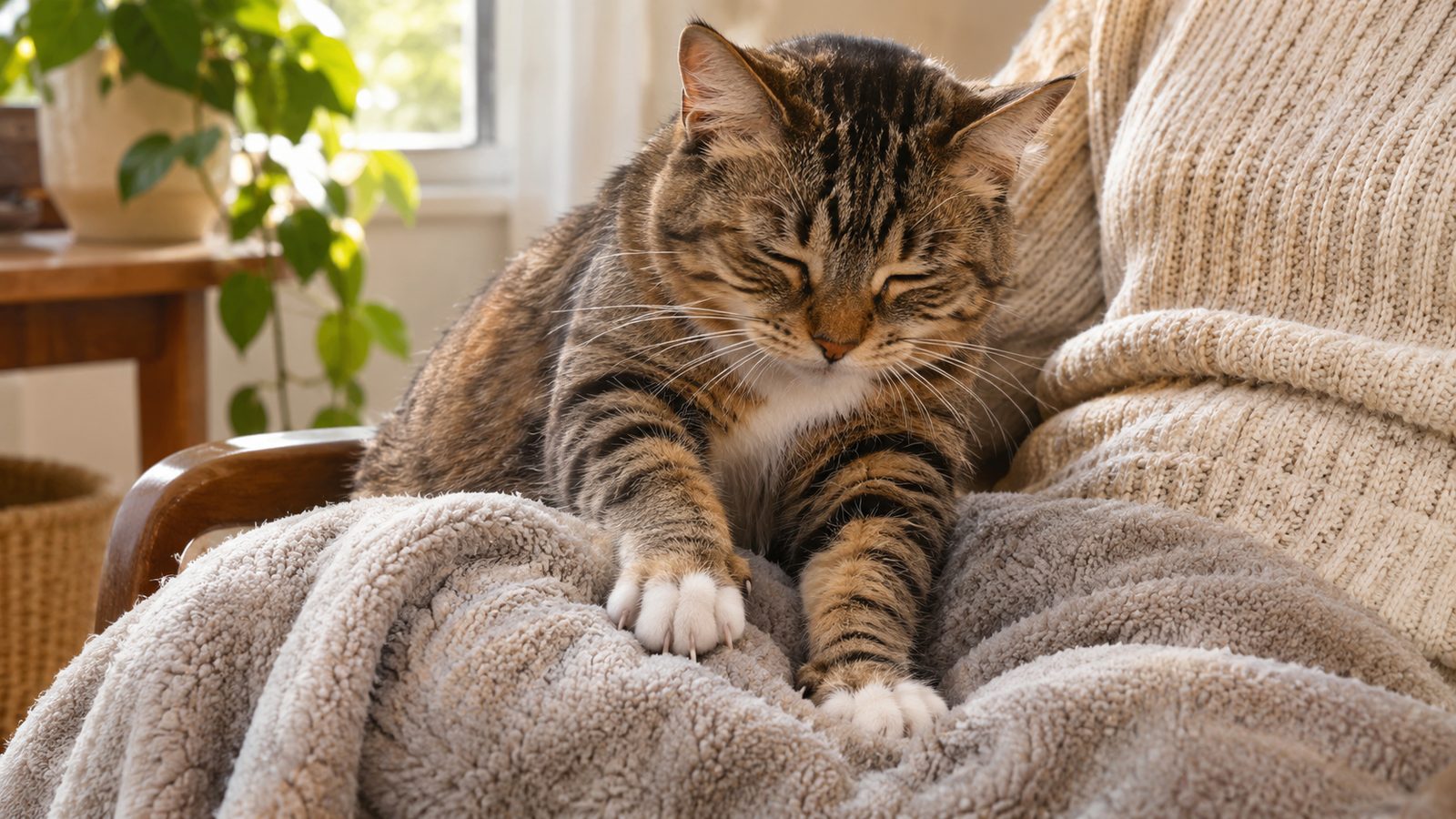
Kneading starts in the first hours of a kitten's life and never really stops. Here is what it means, why the claws come out, and how to keep your lap intact.
Where kneading comes from
Newborn kittens knead their mother's belly to stimulate milk flow. The rhythm of alternating paws, pressed and released, is one of the first motor patterns a kitten learns, and it is wired to a feeling of warmth and a full stomach. Most cats keep the movement into adulthood, and most of them do it on something soft: a blanket, a cushion, your thigh.
Behaviourists are fairly sure the adult version is a leftover comfort behaviour rather than a request for anything. A cat kneading you is telling you, in the only vocabulary it has, that you rank somewhere near its mother in the safety department. That is a compliment, even when it hurts.
The purring, drooling and glazed eyes
Kneading usually comes bundled with a deep purr, half-closed eyes and sometimes a small puddle of drool. These are all signs of a cat that has stopped scanning for threats. Some cats also suckle on fabric while they knead, which is more common in cats weaned early and is harmless unless the cat starts swallowing fibres.
You will also see kneading before a cat lies down, on a bed or a rug, with no person involved. That version is probably territorial as much as comforting: cats have scent glands between their toes, and pressing them into a surface leaves a mark that says this spot is mine.
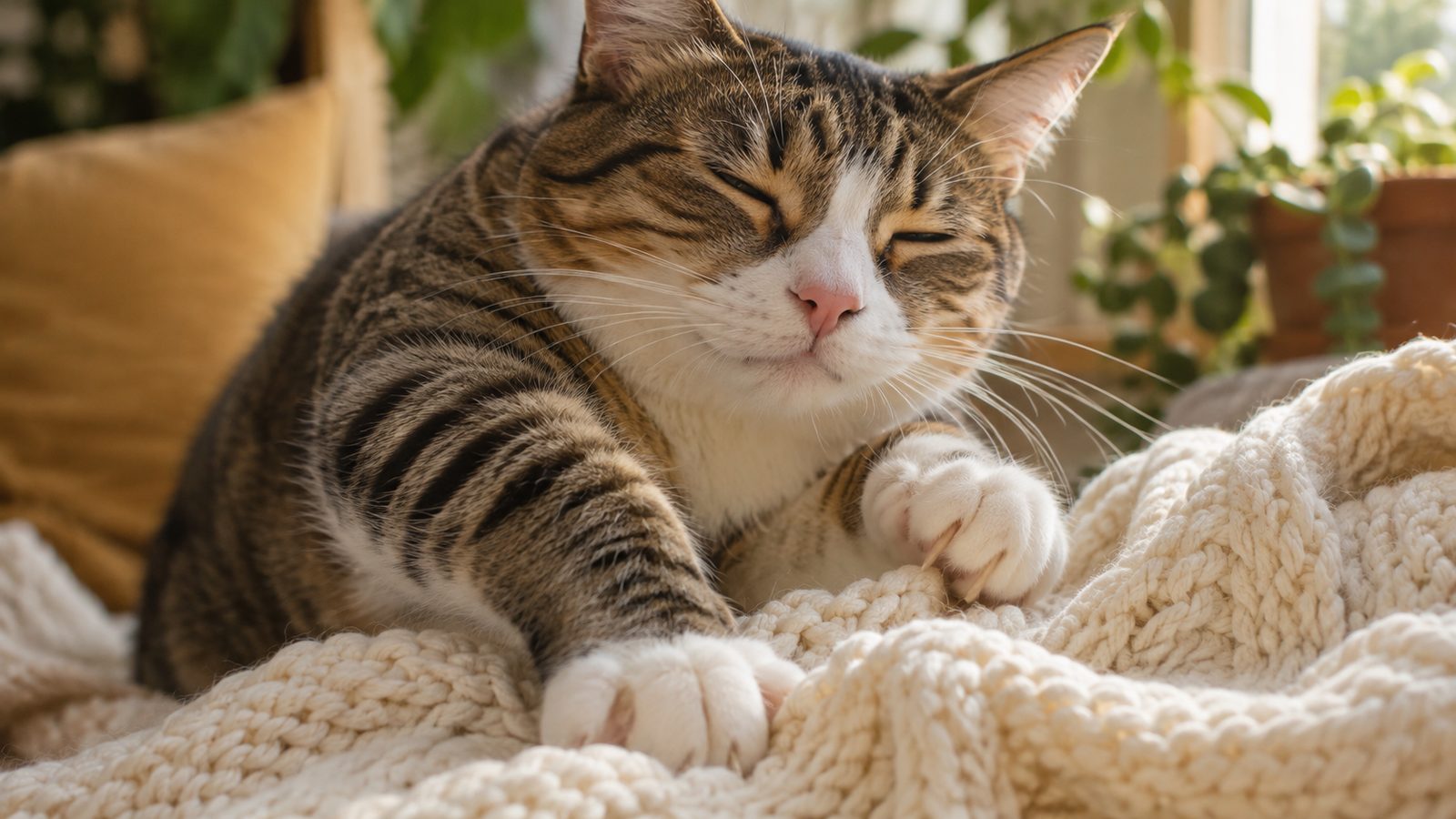
Why the claws come out
The claws extend as a natural part of the pressing motion; the cat is not trying to hurt you. The problem is that a sharp claw on a bare leg feels like a vaccination needle. Do not punish or shove the cat off. From its point of view it was mid-hug, and being pushed away at that moment is confusing and damaging to trust.
The fix is a barrier. Keep a folded fleece or a small cushion on the sofa arm and slide it onto your lap when the paws start. The cat still gets its ritual, you keep your skin. Over a few weeks many cats learn to go straight to the blanket.
Trimming the tips
A fortnightly trim of just the sharp tip of each front claw makes kneading much more pleasant and does nothing to the cat's ability to climb or defend itself. Use proper cat clippers, take off only the clear tip, and stop well short of the pink quick. If your cat will not tolerate it, a groomer or the vet nurse will do it in two minutes.
When kneading changes
A cat that kneads more than usual is usually just content, but a sudden increase in any comfort behaviour can also be a sign of stress: a new pet, a move, a change of routine. Look at the rest of the picture. If appetite, litter box habits and play are normal, the kneading is just kneading.
A cat that stops kneading, especially one that was a lifelong biscuit-maker, is worth watching. Arthritis in the front legs, paw pain and dental pain can all make the movement uncomfortable. Older cats that give up kneading along with jumping onto furniture should get a check-up.
Should you ever discourage it?
Almost never. Kneading is one of the clearest signals of a secure, bonded cat, and discouraging it means discouraging the cat from showing you affection. The exceptions are a cat that is tearing up an expensive fabric, which is solved with the blanket trick, and a cat that suckles and swallows fabric, which needs a vet's input because of the risk of a blockage.
FAQ
Do male cats knead more than females?
No reliable difference has been measured. Individual personality and how early the cat was weaned matter far more than sex.
Why does my cat knead and then bite me?
Overstimulation. The same contact that felt good a minute ago has tipped into too much. Learn your cat's early signals, usually a twitching tail tip or flattening ears, and stop stroking before the bite.
Is kneading a sign my cat was taken from its mother too early?
Not on its own. Nearly all cats knead. Suckling on fabric while kneading is more strongly linked to early weaning, but even that is common in cats raised normally.