Choosing a Cat Litter Box Your Cat Will Actually Use
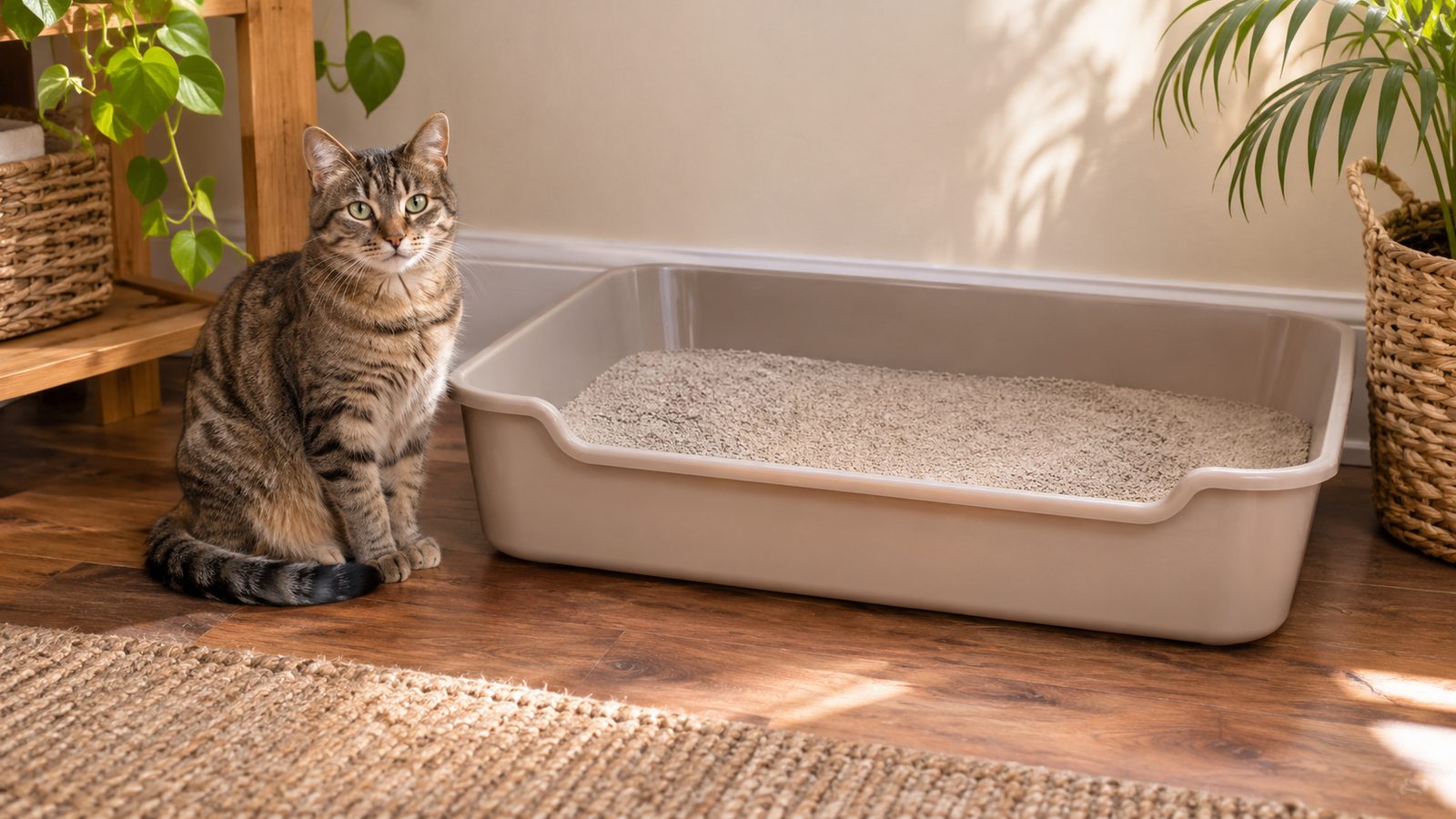
Most litter box problems are not behaviour problems. They are a box that is too small, too enclosed, too scented or in the wrong place. Fix the box and the cat usually fixes itself.
Size: one and a half cats long
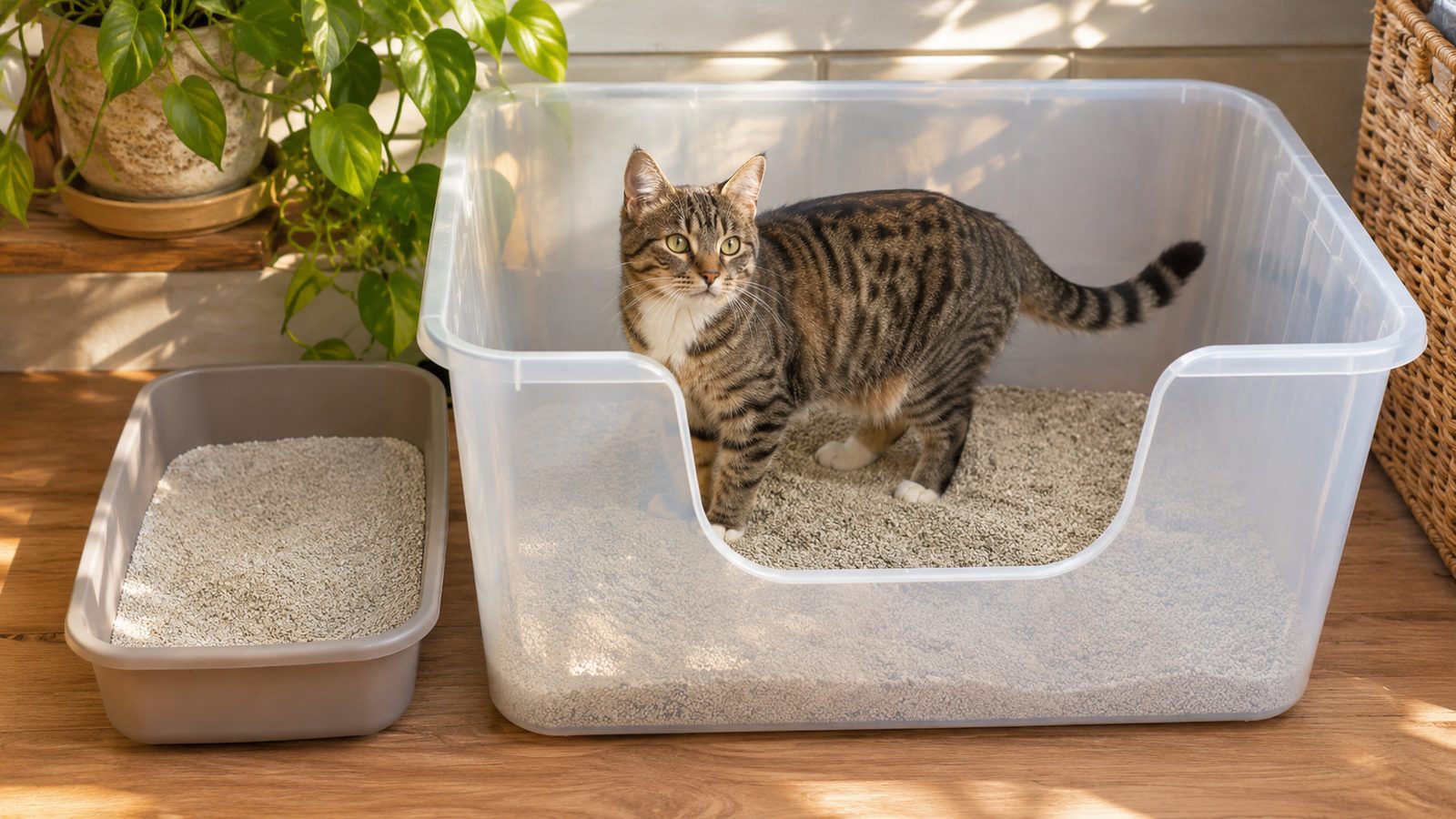
The single most useful rule is that a litter box should be one and a half times the length of the cat, nose to tail base. Almost no box sold as a litter box meets that for an adult cat; a large plastic storage box with a hole cut in one side does, for a fraction of the price. A cat that has to stand with its front feet in and its back feet out will eventually stop bothering.
Depth matters too. Cats dig, and a shallow tray with two centimetres of litter is unsatisfying. Aim for seven to ten centimetres of litter in a box with sides high enough to contain the digging, with a lower entry point for kittens and arthritic seniors.
Open or covered
Covered boxes are for people, not cats. They trap smell inside, which is exactly where the cat has to stand, and they give an anxious cat only one exit in a multi-cat home. Most cats prefer an open box, and the surveys that have asked them, by offering both side by side, back that up. If you must cover one for the look of the room, remove the door flap and clean it more often.
Automatic self-cleaning boxes solve the human problem of scooping and create the cat problem of a machine that moves and whirs in the place they are most vulnerable. Some cats tolerate them; many do not, and a cat that is frightened once by its box can take months to trust it again.
The litter itself
Cats generally prefer a fine, unscented clumping litter that feels like sand under the paws. Scented litters are marketed to owners and disliked by most cats, whose noses are far more sensitive than ours. Crystal, pellet and paper litters work for some cats and are rejected by others; if you want to switch, mix the new litter in gradually over two weeks rather than swapping outright.
Scoop at least once a day and tip the whole box fortnightly, washing with hot water and unscented soap. Bleach and strong cleaners leave a smell that can put a cat off for good.
How many boxes
One per cat plus one, spread around the house rather than lined up in a row. Two boxes side by side are one box to a cat. In a multi-storey home, one per floor.
Location
A quiet spot with more than one way in and out, away from food and water, not beside a noisy washing machine or a door that slams. Bathrooms and utility rooms work if the door is always open. Cupboards under stairs do not, however convenient. Watch where the cat already likes to spend time and put a box within easy reach of it.
When the box is fine and the cat still goes elsewhere
Rule out medical causes first, always. Cystitis, urinary crystals, constipation and arthritis all cause cats to avoid the box, and a cat that strains without producing urine is an emergency. Once the vet has cleared the cat, look at stress: a new cat outside the window, a change in household, a box the dog ambushes. Clean soiled spots with an enzymatic cleaner, never ammonia, and put a box temporarily where the accidents happen, then move it a little each day toward where you want it.
FAQ
Can I train a cat to use the toilet?
You can, with kits and patience, but it removes the cat's natural digging behaviour and makes it impossible to monitor urine output, which is how most kidney and bladder problems are caught. We do not recommend it.
Why does my cat not cover its waste?
Some cats never do, and it can be a sign of a confident cat marking rather than a problem. If it is new, check the box size and litter depth; cats stop covering when digging is unpleasant.
Does litter box placement affect spraying?
Spraying on vertical surfaces is marking, not toileting, and box placement rarely changes it. Neutering and reducing stress do.