Teaching Your Dog to Walk on a Loose Leash
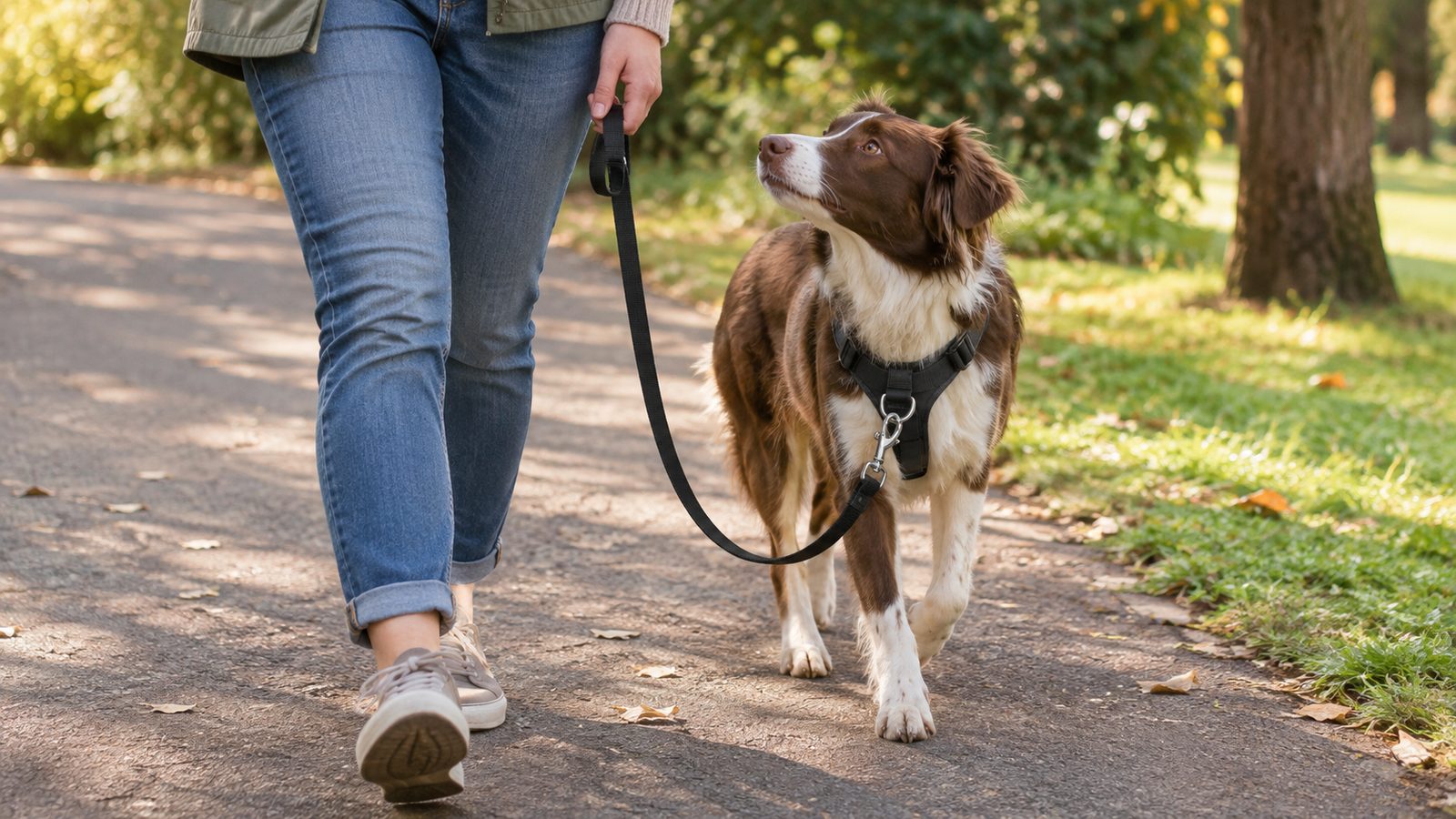
Pulling works for the dog, which is why it keeps happening. The fix is to make pulling stop working and make walking beside you pay, starting in your hallway.
Why dogs pull
A dog pulls because pulling gets it where it wants to go. Every step you take while the lead is tight pays the dog for pulling, and most dogs have been paid thousands of times before anyone tries to change the habit. There is nothing dominant or stubborn about it. It is just a very well-rehearsed behaviour with a reliable reward.
That also means the solution is mechanical rather than mystical. Stop paying for a tight lead, start paying for a loose one, and manage the walks in between so the dog does not keep practising the old way. The hardest part is being consistent, because a dog that gets to pull one walk in five learns that persistence pays.
Set up for success
Use a comfortable Y-front harness with a front clip for the training period, a plain two-metre lead, and a pouch of small, soft treats the dog actually wants. Practise the first sessions indoors and in the garden, where there is nothing worth pulling toward. Your dog cannot learn a new skill for the first time in a park full of squirrels.
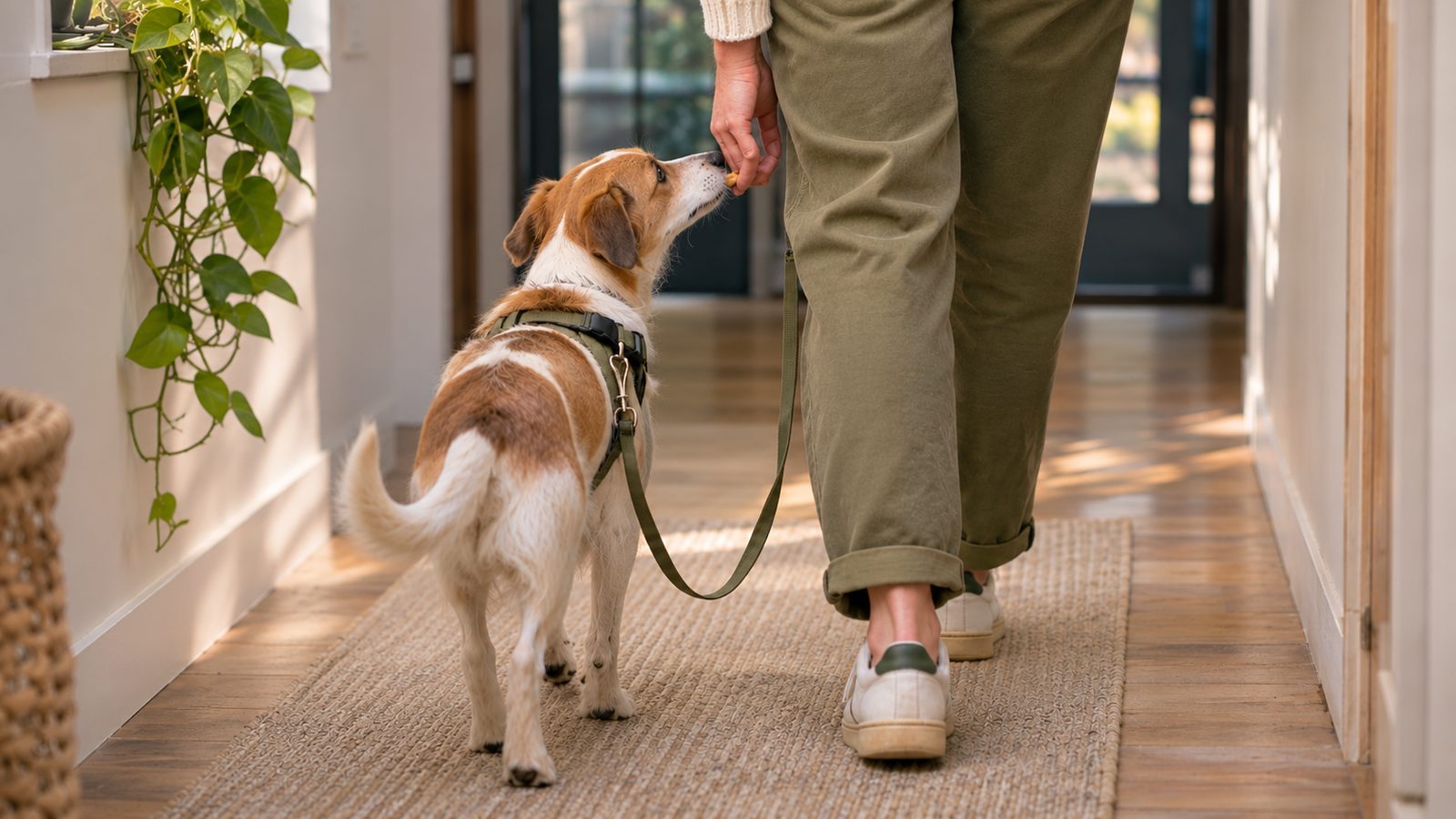
Pick a side and stick to it. Hold the lead in the opposite hand and deliver treats with the hand nearest the dog, at the seam of your trouser leg, so the dog learns that good things appear in exactly one position.
The core exercise
Stand still with the dog beside you. The moment the dog looks at you, mark it with a word such as yes and give a treat at your leg. Repeat ten times. Then take one step. If the dog comes with you and the lead stays loose, mark and treat. Build up to two steps, then five, then a slow lap of the garden, paying every few steps at first and gradually asking for more steps per treat.
When the lead goes tight, stop. Do not yank, do not say anything. Just stand like a tree until the dog looks back or the lead slackens, mark that, and walk on. The dog learns that tension stops the walk and slack restarts it. This is slow, and the first real walks will take twenty minutes to cover a hundred metres. That is normal.
Changing direction
If stopping is not enough for a strong puller, turn and walk the other way the instant the lead tightens, cheerfully, without a jerk, and reward the dog when it catches up at your side. Dogs quickly learn to keep an eye on you when you are unpredictable.
Taking it outside
Move to the quietest street you can find, then busier ones, over a few weeks. Pay more often in new places, because the distractions are stronger. Let the dog sniff as a reward: when it has walked ten paces nicely, say go sniff and give a few metres of lead. Sniffing is often worth more than food, and using it as a reward is the trick that makes loose-lead walking stick for life.
On days when you are in a hurry and cannot train, use a different piece of equipment, such as the front clip or a different harness, so the dog can tell the difference between training walks and getting-there walks. It is not ideal, but it stops the pulling habit from creeping back into the training.
How long it takes
A puppy with no pulling history can walk nicely in a couple of weeks. An adult dog with years of practice takes two or three months of consistent work, with a noticeable improvement in the first fortnight and a long tail of consolidation. Everyone in the house must do the same thing, or the dog learns to pull with the person who allows it. If you are not improving after a month, a reward-based trainer can usually spot the hole in one session.
FAQ
Should I use a retractable lead?
Not while training. A retractable lead is always under tension, which teaches the dog that tension is normal. They also cause burns and tangles. Use a fixed-length lead and a long line for sniff walks.
My dog pulls toward other dogs. Same method?
The same method with more distance. Work at a distance where the dog can still take treats, and reduce it over weeks. If the dog lunges and barks, that is reactivity and worth a trainer's help.
Is heel the same as loose-lead walking?
No. Heel is a precise position for short stretches, useful at road crossings. Loose-lead walking just means the lead has slack; the dog can be anywhere within it. Most owners want the second one.