Signs Your Pet Is in Pain and What to Do About It
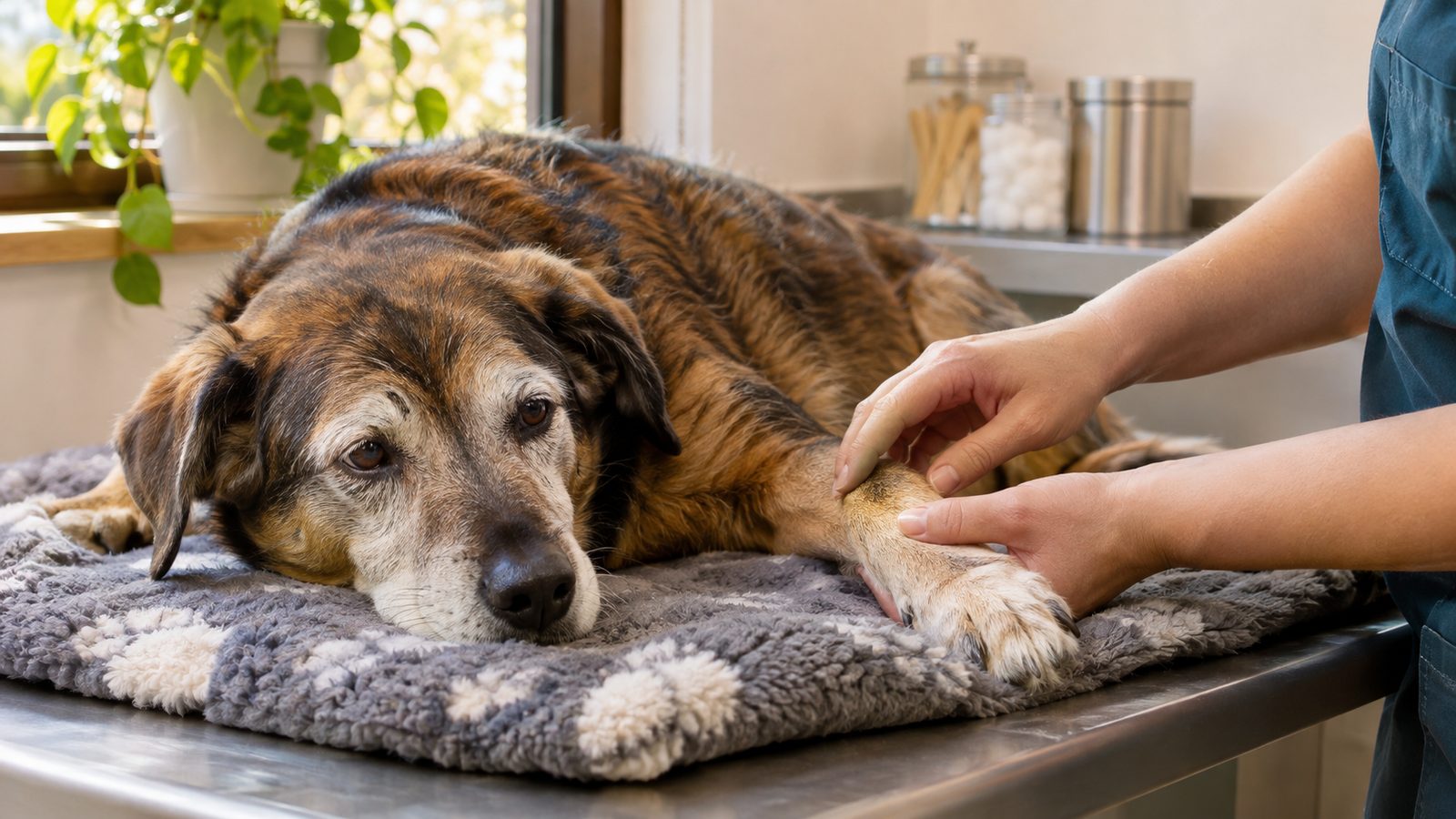
Animals hide pain. By the time a dog or cat cries out, something has usually been wrong for a while. These are the quieter signs a veterinary nurse looks for first.
Why pets hide it
A wild animal that limps is the one the predator picks. That instinct did not disappear when dogs and cats moved indoors, and cats in particular are experts at looking perfectly normal while in significant discomfort. Owners often tell us their pet cannot be in pain because it is still eating. Eating is one of the last things to go.
The useful signs are changes from the animal's own normal, which is why you are the best person to spot them. A vet sees your pet for fifteen minutes a year; you see it every day. Write down what you notice and when; a timeline is far more useful than a feeling that something is off.
Signs in dogs
A dog in pain often becomes quieter and sleeps more, which is easy to read as settling down with age. Other common signs are reluctance to jump into the car or onto the sofa, slowing on walks, stiffness after rest that eases with movement, licking one spot repeatedly, panting at rest, and a change in posture such as a tucked tail or an arched back.
Watch the face as well. A dog with a headache or dental pain may squint, hold its ears back, or flinch when its head is touched. Irritability toward other dogs or children in a previously tolerant dog is pain until proven otherwise.

Signs in cats
Cats in pain stop doing things rather than start doing new ones. They stop jumping onto the counter, stop grooming the back end, stop using a high-sided litter box, and start sleeping in low, hidden places. A cat that sits hunched with its feet tucked under and its eyes half closed, in the middle of the day, in a room it does not usually use, is a cat to worry about.
Facial signs have been studied closely in cats: ears rotated outward and flattened, eyes narrowed, whiskers pulled back and down, and a tense muzzle. Vets use a scoring system based on these, and once you have seen the pictures you will recognise them.
Small pets and birds
Rabbits and guinea pigs grind their teeth loudly, sit hunched and stop eating, which in these animals is an emergency within hours. Birds fluff up, sit on the floor of the cage and stop talking or preening. For any of these, a vet the same day.
What to do first
Do not give human painkillers. Paracetamol kills cats, ibuprofen causes kidney failure and stomach ulcers in dogs, and even the dose that seems tiny for a large dog can be dangerous. The only safe painkillers for pets are the ones a vet prescribes for that animal.
Rest the animal, keep it warm, and call the vet. Describe the signs, when they started, and whether they are getting worse. Most practices will see a painful animal the same day. If the pet is crying out, cannot stand, has a swollen belly, is straining to urinate, or has been hit by a car, go now, without calling first.
Living with chronic pain
Arthritis is the big one for older dogs and cats, and it is treatable: weight loss, prescribed anti-inflammatories, joint supplements with some evidence behind them, and small changes at home such as ramps, non-slip rugs and a low-sided litter box. A pet on a good pain plan often becomes visibly younger within weeks, and owners frequently say they had not realised how much it had been holding back. The hardest part is deciding to ask.
FAQ
Can I give my dog aspirin?
Not without a vet's instruction. Aspirin has a narrow safe range in dogs, interacts badly with the drugs a vet would otherwise prescribe, and is toxic to cats.
My cat is purring. Can it still be in pain?
Yes. Cats purr when content and also when frightened, injured or dying. Purring alone tells you nothing about pain.
How do vets measure pain?
With validated scoring scales based on posture, behaviour and facial expression, plus response to touch. Ask to see the score; it helps you track whether treatment is working.