The Best Starter Aquarium Setup for Beginners (And What to Skip)
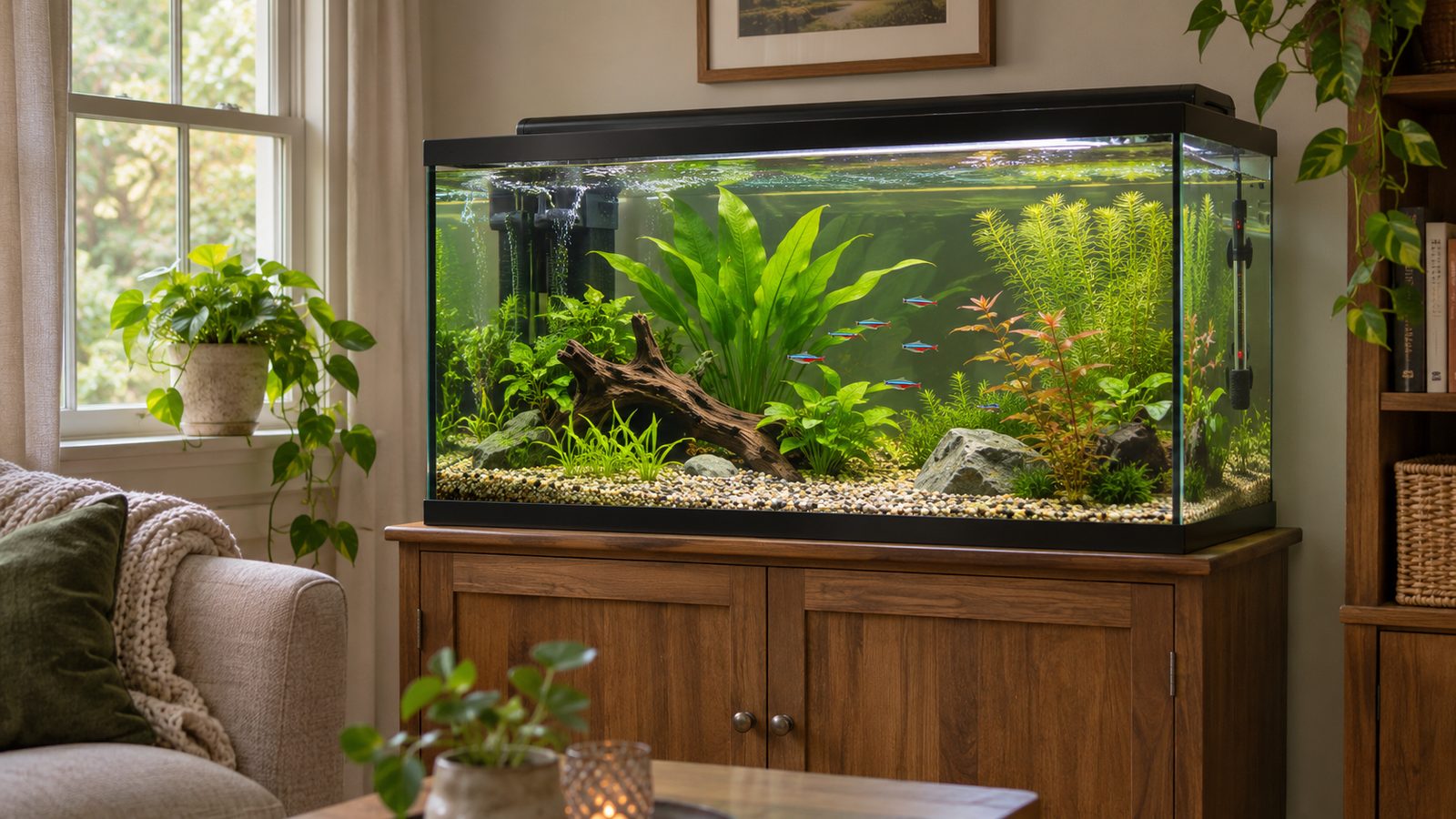
Most first tanks fail in the first month, and it is almost never the fish's fault. A bigger tank, a cycled filter and patience will carry you past the point where everyone else gives up.
Bigger is easier, not harder
The most common beginner purchase is a small cube of ten or twenty litres, because it looks manageable. It is the opposite. A small volume of water changes temperature and chemistry fast, so a single overfeeding or a missed water change tips it into trouble. Sixty litres, roughly a 60 cm tank, is the smallest size we recommend for a first community tank, and ninety is better.
A bigger tank also widens your choice of fish. Many popular species, including the common neon tetra, want to be in groups of eight or more, and a group needs room to move. Starting at sixty litres means your first stocking plan does not have to be a compromise.
The equipment that matters
Three things keep fish alive: a filter, a heater and a thermometer. For a sixty-litre tank a hang-on-back filter rated for the volume is fine; an internal filter works too and is quieter. Choose a heater with an adjustable thermostat, and set it to the temperature your planned fish need rather than the number on the box.
Skip the undergravel filter, the colour-changing LED hood and the treasure chest that blows bubbles. Buy a gravel vacuum, a bucket you will use for nothing else, a liquid test kit for ammonia, nitrite and nitrate, and a bottle of dechlorinator. That kit will get you through the first year.
Cycling: the step everyone skips
Fish produce ammonia, which is toxic. A mature filter is home to bacteria that turn ammonia into nitrite, which is also toxic, and then into nitrate, which is harmless at low levels. Growing that bacteria colony takes four to six weeks, and if you add fish before it exists, the fish swim in their own poison. This is why so many first tanks lose every fish in the first month.
Cycle the tank before any fish go in. Add a small pinch of fish food or a measured dose of bottled ammonia every other day and test the water. You will see ammonia rise, then nitrite, then both fall to zero while nitrate climbs. When ammonia and nitrite read zero twenty-four hours after a dose, the tank is ready.
Bottled bacteria
Starter cultures from a pet shop can shorten cycling to a couple of weeks, but they are not a substitute for testing. Use them if you like, keep testing, and only add fish once the numbers say so.
Stocking slowly
Add fish in small groups two weeks apart so the bacteria colony can grow with the load. A sensible first plan for sixty litres is a group of eight small tetras or rasboras, a trio of bottom-dwelling corydoras catfish a month later, and a single centrepiece fish such as a honey gourami after that. Resist the shop's assortment tank; mixed bags of fish with different needs are where most problems begin.
Avoid common goldfish, which outgrow any beginner tank, and avoid anything the shop labels semi-aggressive until you have a year of experience.
The weekly routine
Once a week, change a quarter of the water with the gravel vacuum, add dechlorinator to the new water, and wipe the inside of the glass. Feed once a day, only what disappears in a minute. Test the water every week for the first three months and then whenever something looks off. That is the whole hobby at beginner level, and it takes about twenty minutes.
FAQ
Do I need live plants?
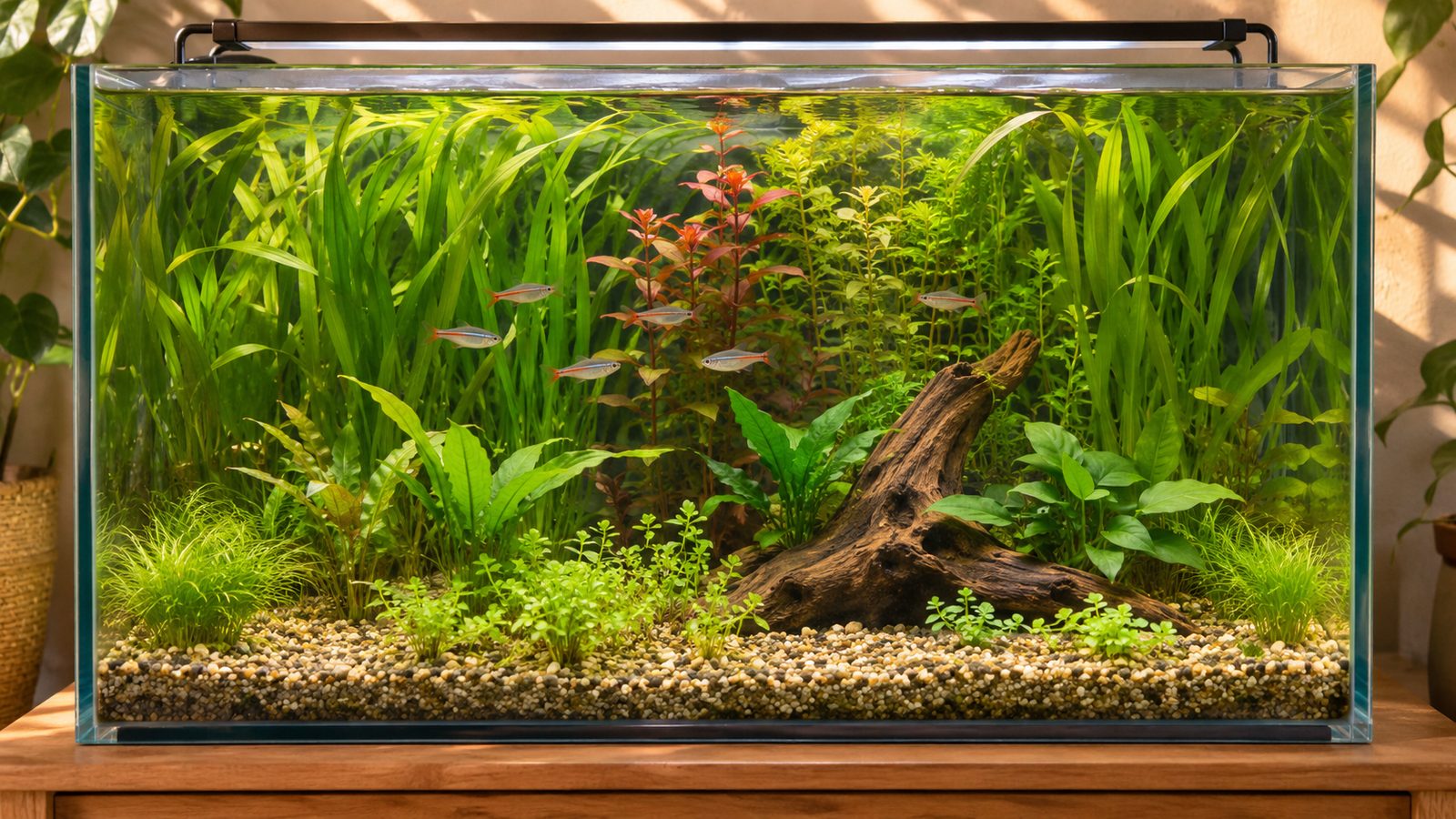
No, but a few easy ones such as anubias, java fern and cryptocoryne help absorb nitrate and give shy fish cover. They also make the tank look like a tank rather than a bowl.
How many fish can I keep in sixty litres?
A fair rule is around one centimetre of adult fish per litre for small, peaceful species, so roughly fifteen to twenty small fish once the tank is mature.
Can I keep a betta in a community tank?
Sometimes, with calm tankmates and plenty of plants, but it is a gamble. A betta is happier alone in a heated, filtered twenty-litre tank of its own.