Dog Harness vs Collar: What Trainers Actually Recommend
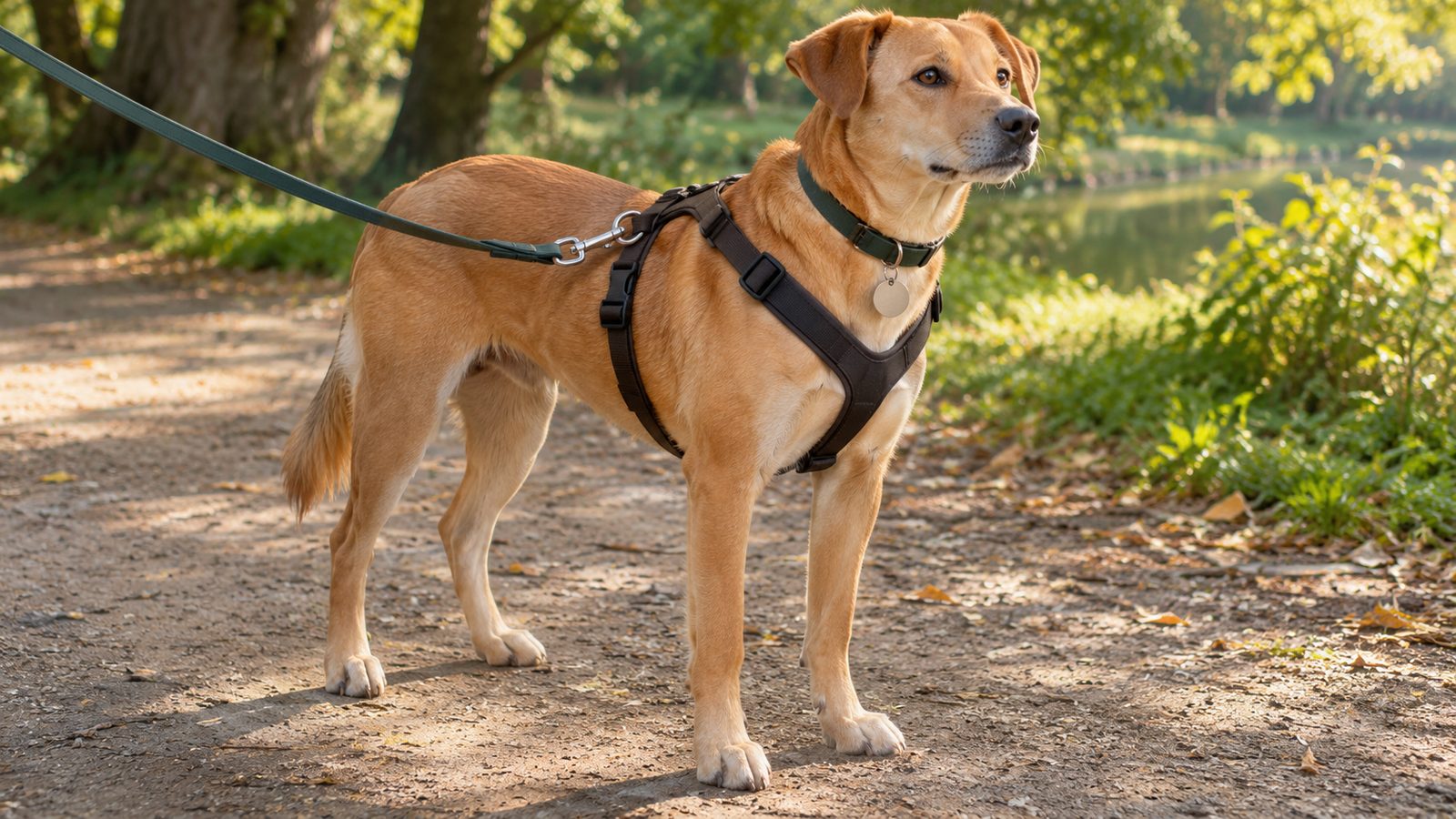
The collar carries the tag. The harness carries the dog. Here is how to choose a harness that fits, which types to avoid, and why we still ask every dog to wear both.
What each one is for
A flat collar holds an identity tag and gives you something to grab in a pinch. That is its job. Walking a dog that pulls on a collar puts the whole force of the pull on a few square centimetres of throat, and the research on pressure to the neck, eyes and thyroid is not comforting, particularly for small and flat-faced breeds.
A harness spreads that force across the chest and shoulders. For everyday walks, especially with a dog that has not yet learned to walk on a loose lead, a well-fitted harness is kinder and gives you more control. The collar stays on for the tag; the lead clips to the harness.
Types of harness and the one to avoid
Y-shaped harnesses, where the straps form a Y across the chest and leave the shoulders free, are the design most trainers and canine physiotherapists prefer. The dog can move its front legs through a full stride. Look for a padded chest piece, two points of adjustment on each side, and a back clip plus an optional front clip.
Avoid harnesses with a horizontal strap running straight across the front of the chest and over the shoulder joints. These restrict the shoulder with every step and, over years, can change a dog's gait. They are also the type most often marketed as no-pull, which brings us to the next point.
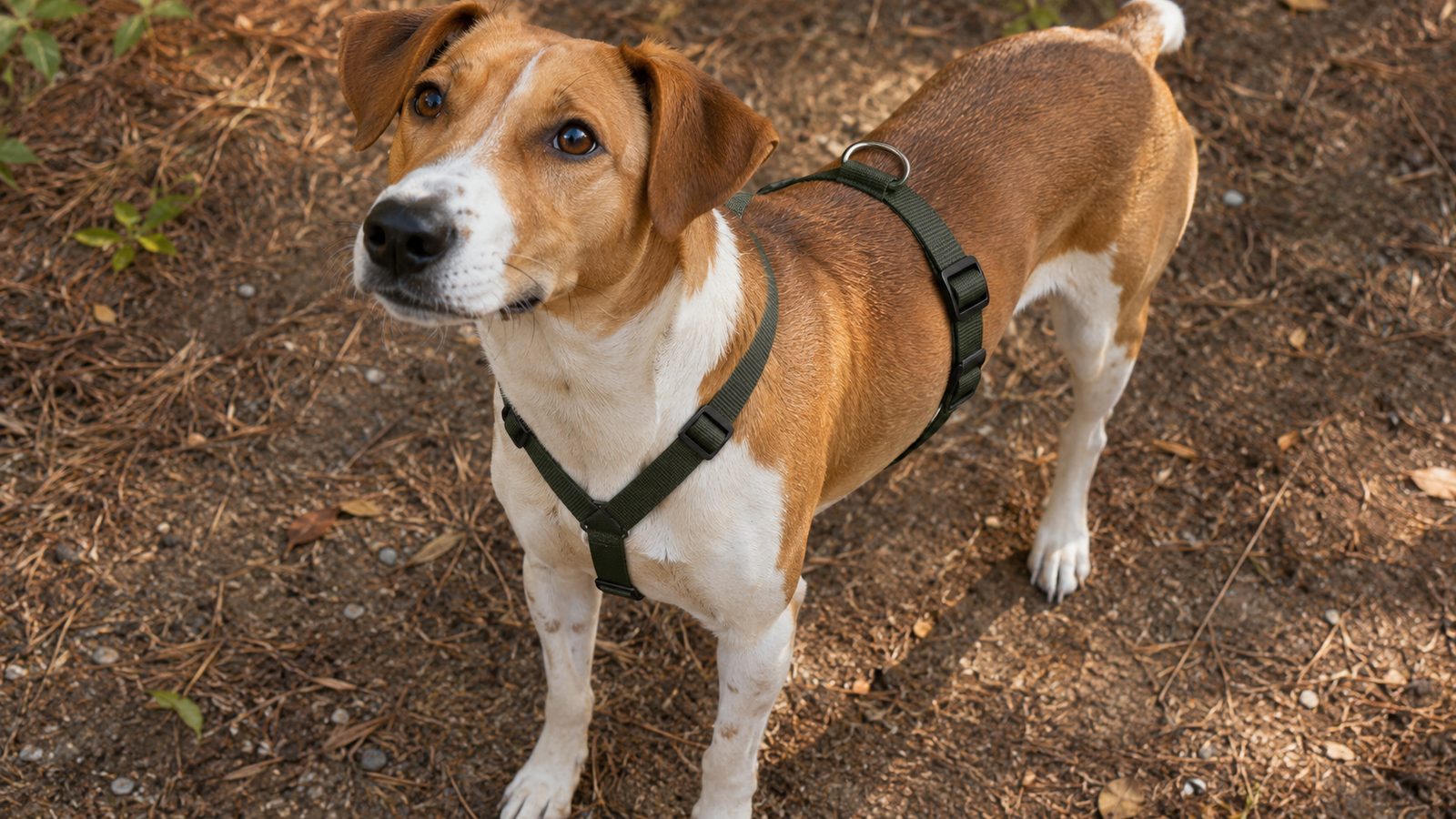
Do no-pull harnesses work?
A front-clip harness changes the geometry of pulling: when the dog surges forward the lead turns it slightly sideways, which takes the fun out of it. For many dogs that is enough to reduce pulling by half on the first walk. It is a management tool, not training; the dog has not learned anything, it has just stopped being rewarded by forward motion.
Harnesses that tighten under the armpits when the dog pulls are a different matter. They work by discomfort, and the dog learns to associate that discomfort with whatever it was looking at, which can be another dog or a child. We do not use them. Teach loose-lead walking instead, and use a front clip while the dog learns.
Head collars
A head collar gives the most control of a large, strong dog and can be a sensible interim tool for a handler who cannot physically hold the dog otherwise. Most dogs hate the sensation at first and need days of careful introduction with treats. Never jerk a lead attached to a head collar; the dog's neck takes the twist.
Getting the fit right
Measure the chest at its widest point, just behind the front legs, and the neck where a collar would sit, and buy by those numbers rather than by breed or weight. Once it is on, you should be able to slide two fingers flat under every strap. The chest piece should sit on the sternum, not up on the throat, and the back strap should sit behind the shoulder blades, not on them.
Check the fit monthly on a growing dog and after any change in weight or coat. Chafing under the armpits means the strap is too tight or too far forward. A harness that is comfortable is one the dog will walk up and push its head into when you pick it up.
Our recommendation
A lightweight flat collar with an engraved tag, worn whenever the dog is out, and a padded Y-front harness with back and front clips for walks. Clip the lead to the back ring once the dog walks nicely and to the front ring on days it does not. Spend the money you saved on a no-pull gadget on a few sessions with a reward-based trainer; that is what actually stops the pulling.
FAQ
Should a dog wear a harness all day?
No. Take it off at home. A harness worn constantly mats the coat, rubs the skin and can catch on furniture.
Can a puppy wear a harness?
Yes, from the first walks. Buy one with plenty of adjustment, check the fit weekly, and introduce it with treats before the first outing.
Is a harness safe in the car?
Only a harness that has been crash tested for the purpose, used with the seat belt attachment it was tested with. An ordinary walking harness will not hold in a collision.