How to Crate Train a Puppy Without Tears (Yours or Theirs)
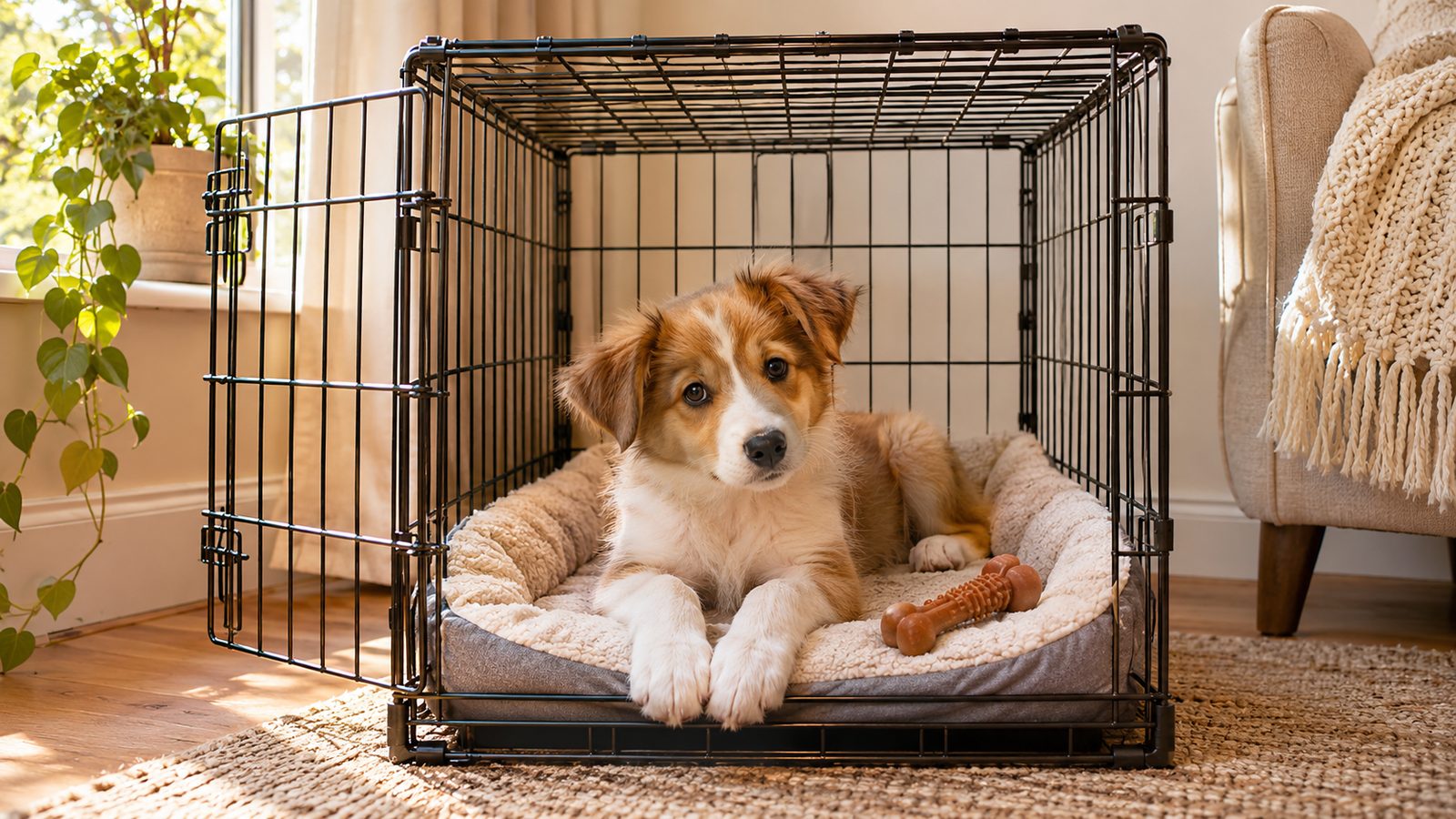
A crate is a bedroom, not a jail. Here is the week-by-week plan we use with new puppies, and the three mistakes that turn a cozy den into a battleground.
Why a crate works when it is introduced properly
Dogs are den animals in the loosest sense: they like a small, enclosed spot where nothing can sneak up on them. A crate gives a puppy exactly that, plus a place where it physically cannot chew the sofa leg while you are in the shower. Used well, it speeds up house training, because most puppies will hold their bladder rather than soil the place they sleep.
The trouble starts when the crate is used as punishment or as a place to park the puppy for eight hours. A puppy that is shoved in and left to cry learns that the crate predicts loneliness. From then on every session is a fight. The plan below avoids that by making the crate the most boring, pleasant place in the house before the door is ever closed.
Choosing and setting up the crate
Buy the size the puppy will need as an adult and use the divider panel that comes with most wire crates. The space inside should let the puppy stand up, turn around and lie flat, and not much more. Too much room and the puppy will pick a corner as a toilet.
Put the crate where the family actually spends time: the kitchen, the living room, your bedroom at night. A crate in a laundry room teaches isolation. Add a washable mat, a worn t-shirt that smells of you, and a chew toy that only ever appears inside the crate.
The first week: door open, zero pressure
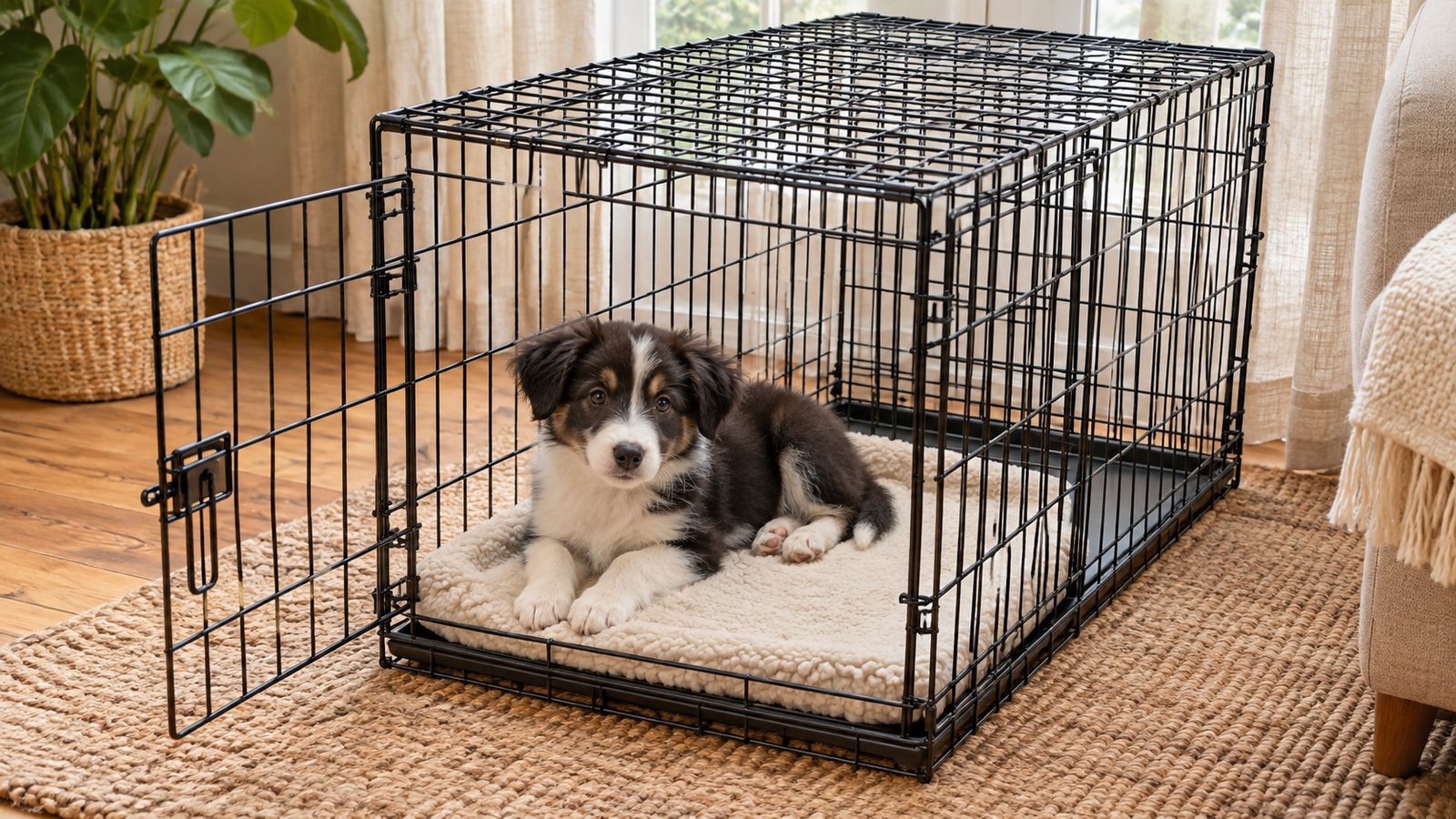
Days one to three are about the puppy walking in on its own. Toss a treat just inside the door, then further back, then onto the mat. Feed every meal in the crate with the door open. Do not close the door, do not say the word crate, do not make a fuss. You are building a habit, not teaching a trick.
By day four most puppies will nap in the crate by choice. That is your cue to close the door for a few seconds while the puppy is eating, then open it before the meal is finished. Repeat across the day, stretching each closed stretch by a few seconds. If the puppy fusses, you went too fast; shorten the next one.
What to do about crying
A puppy that cries after thirty seconds of a closed door was not ready for thirty seconds. Wait for the briefest pause in the noise, then open the door calmly. Opening the door during full cry teaches that crying works; opening during a pause teaches that quiet works. The difference is a second or two of timing, and it matters enormously.
Week two: real naps and the first night
Once the puppy tolerates ten quiet minutes with the door closed while you are in the room, start leaving the room. Go to the kitchen, come back, open the door. Then five minutes. Then put the kettle on. The puppy learns that you always come back and that the crate is where naps happen.
For the first nights, put the crate beside your bed. Puppies under twelve weeks will need a toilet trip once in the night; a crate at arm's reach means you hear the restlessness before it becomes an accident. Carry the puppy out, no play, no talking, straight back in. Within a week or two the night trip usually disappears on its own.
The three mistakes that undo everything
First, using the crate as a time-out. If the puppy is sent to the crate after chewing a shoe, the crate becomes the place bad things happen. Interrupt the chewing, redirect to a toy, and leave the crate out of it.
Second, too long too soon. A rough rule is one hour per month of age during the day, up to about four hours, and never a full working day without a break. A puppy left for six hours at ten weeks will soil the crate, and once a puppy has learned it can live with a dirty bed, house training gets much harder.
Third, letting the puppy out because it is whining. We covered timing above, but it bears repeating: every time whining opens the door, the whining gets longer next time. Wait for the pause.
When to stop using the crate
Many dogs keep using their crate for life as a bed, door open, and there is nothing wrong with that. The door can stay open permanently once the dog is reliably house trained and no longer destructive when alone, which for most dogs is somewhere between one and two years old. Test it with short absences first: a dog that was fine in the crate may still redecorate the hallway when given the whole house.
FAQ
How long can a puppy stay in a crate during the day?
Roughly one hour per month of age, capped around four hours, with a walk and play before and after. Younger puppies need more frequent breaks.
Should the crate be covered?
Many puppies settle faster with a light cover over the top and sides, because it cuts visual distractions. Leave the front open for air and so the puppy can see you.
My puppy soiled the crate. Did I ruin the training?
No. Clean it with an enzymatic cleaner, shorten the sessions, and add a toilet trip right before each one. One accident is a scheduling error, not a lost cause.