Budgie vs Cockatiel: Which Bird Is Right for You?
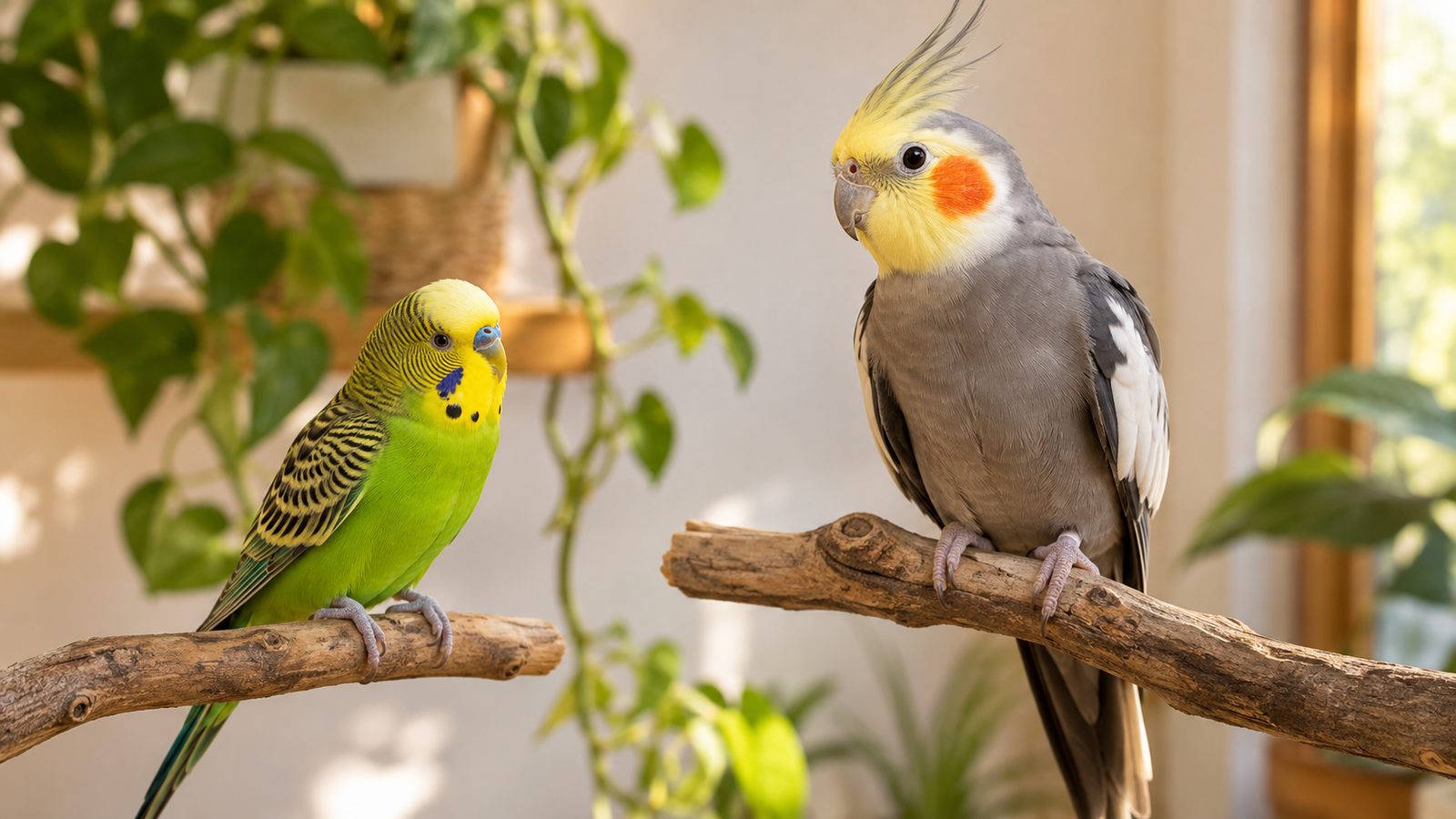
They are the two most popular pet parrots for good reason. One is a chatterbox the size of your thumb, the other a whistling shoulder companion with a twenty-year contract.
Size, noise and lifespan
A budgerigar weighs about forty grams and lives seven to twelve years with good care. A cockatiel is twice the length, weighs around ninety grams, and routinely reaches twenty. That difference is the first thing to sit with. A cockatiel bought for a ten-year-old will likely be with the family when that child finishes university.
Both are vocal, but differently. Budgies produce a constant cheerful chatter, especially in pairs, that most people find pleasant background noise. Cockatiels whistle tunes, call loudly at dawn and dusk, and a lonely one will contact-call for its person with a piercing note that carries through walls. Neither is suited to a flat with thin walls and irritable neighbours, but the cockatiel is the louder bet.
Temperament and handling
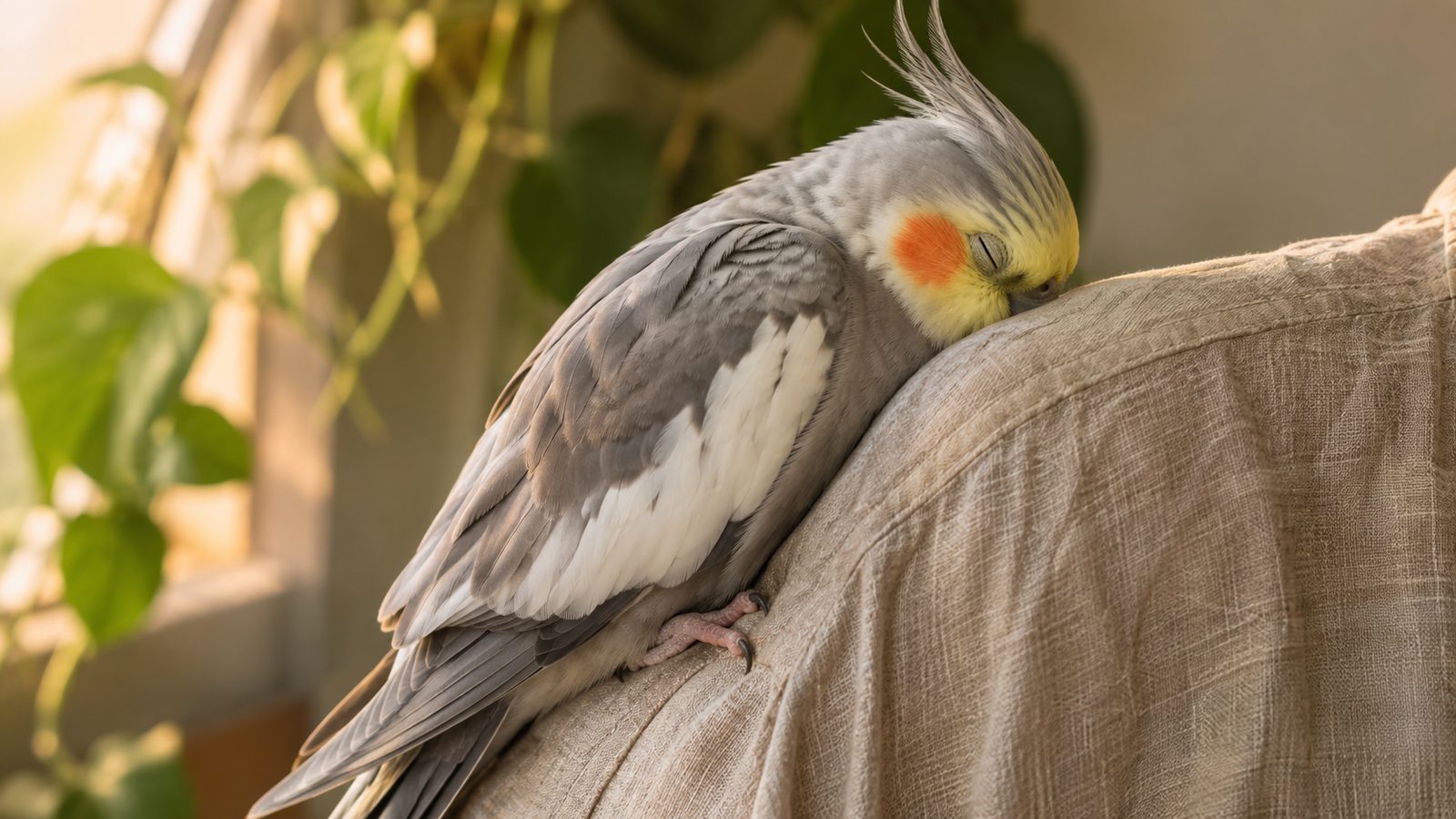
Cockatiels are the cuddlers of the small parrot world. A hand-reared cockatiel will ride on your shoulder, lower its head for scratches and fall asleep against your neck. They bond hard and need daily out-of-cage time with their person, or they become withdrawn and prone to feather plucking.
Budgies are more independent. They enjoy people and can become finger-tame with patient training, but they are happiest with another budgie and will play with each other for hours. If you want a bird that entertains itself while you are at work, a pair of budgies is the better match.
Talking
Budgies are among the best talkers of any parrot, and male budgies in particular can build vocabularies of dozens of words, although in a tiny, fast voice that takes a practised ear. Cockatiels can learn a few words but are far better at whistling; many learn whole tunes and will perform them on request.
Neither bird is guaranteed to talk, and females of both species talk less. Buy a bird because you like the bird, not for the party trick.
Housing and daily care
Both need a cage far wider than it is tall, because birds fly sideways, not up. For a pair of budgies, sixty centimetres wide is a floor, and more is better. A cockatiel needs around eighty centimetres and bar spacing no wider than two centimetres. Perches of varying thickness, a cuttlebone, foraging toys and a daily change of water are non-negotiable for either.
Diet is where most pet birds go wrong. Seed alone is junk food. Feed a quality pellet as the base, with fresh vegetables daily and seed as a treat. Cockatiels in particular pack on fat on an all-seed diet and develop liver disease by middle age.
Dust
Cockatiels produce a fine powder from their feathers that settles on every surface and can trigger allergies and asthma. If anyone in the house has a sensitive chest, a budgie is the safer choice, and an air purifier near the cage is a good idea for either.
The verdict
Choose a cockatiel if you want a single bird that treats you like its mate, you are home most days, and you are comfortable with a two-decade commitment. Choose a pair of budgies if you want lively, chattering company that mostly entertains itself, your budget for cage and vet bills is smaller, and the thought of a bird screaming for you from another room sounds like a problem rather than a charm.
FAQ
Can a budgie and a cockatiel share a cage?
Not safely. The size difference and different play styles lead to injuries, usually to the budgie. Separate cages in the same room is fine.
Do pet birds need a vet?
Yes, an avian vet, and birds hide illness until they are very sick. A yearly check and a same-day appointment for any fluffed-up, quiet bird on the floor of the cage.
Male or female?
Males of both species tend to be more vocal and more inclined to talk or whistle. Females can lay eggs without a mate, which brings its own health concerns.